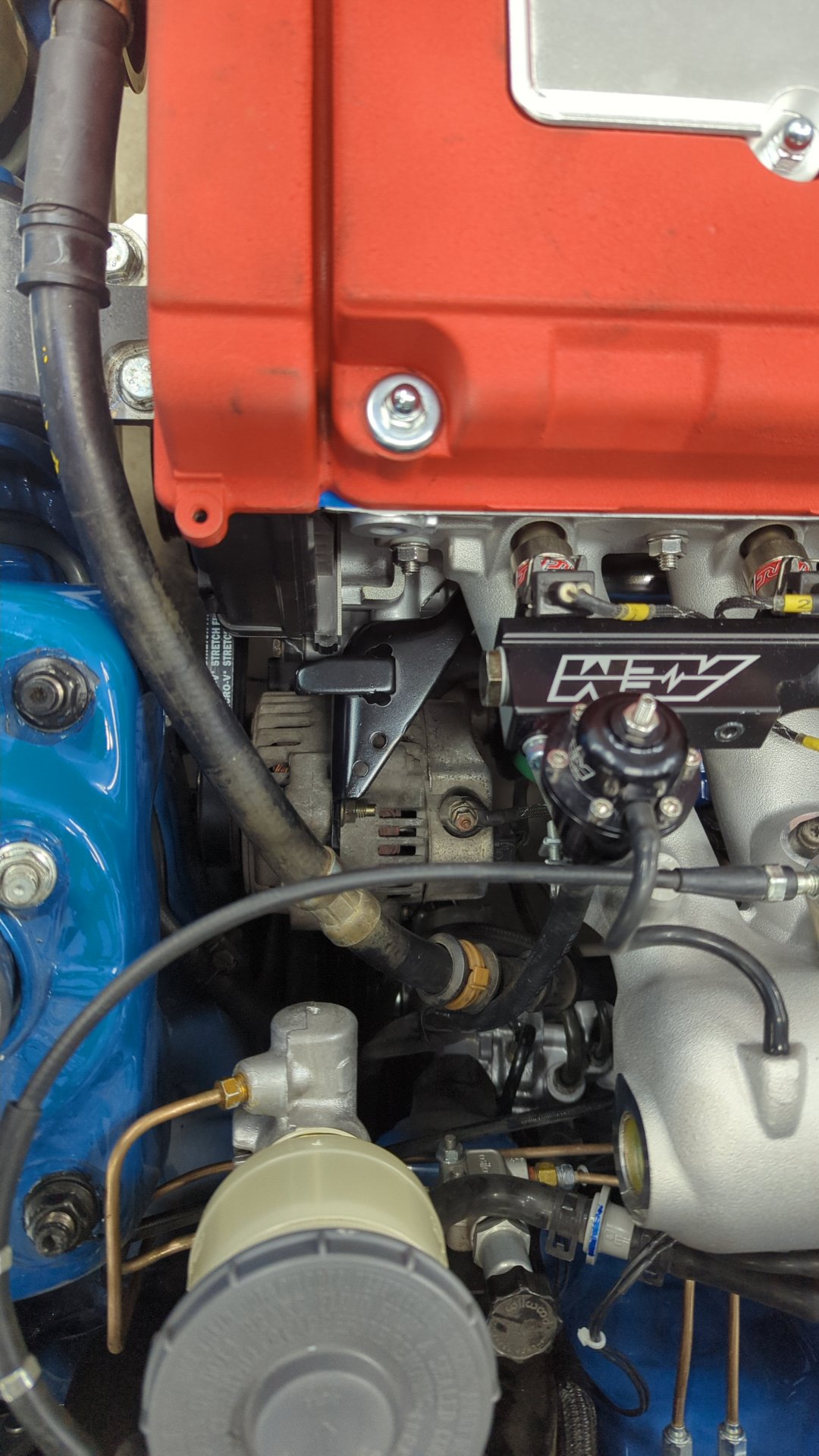
How to Build a B20 VTEC Part 12: Engine Accessories
For engine accessories such as the power steering pump, alternator, or AC (I’m not using AC) you can mostly treat a B20V like a regular B20. The power steering pump is the only accessory that’ll require special attention since it mounts to both the head and the block instead of just the block like the alternator or AC compressor.
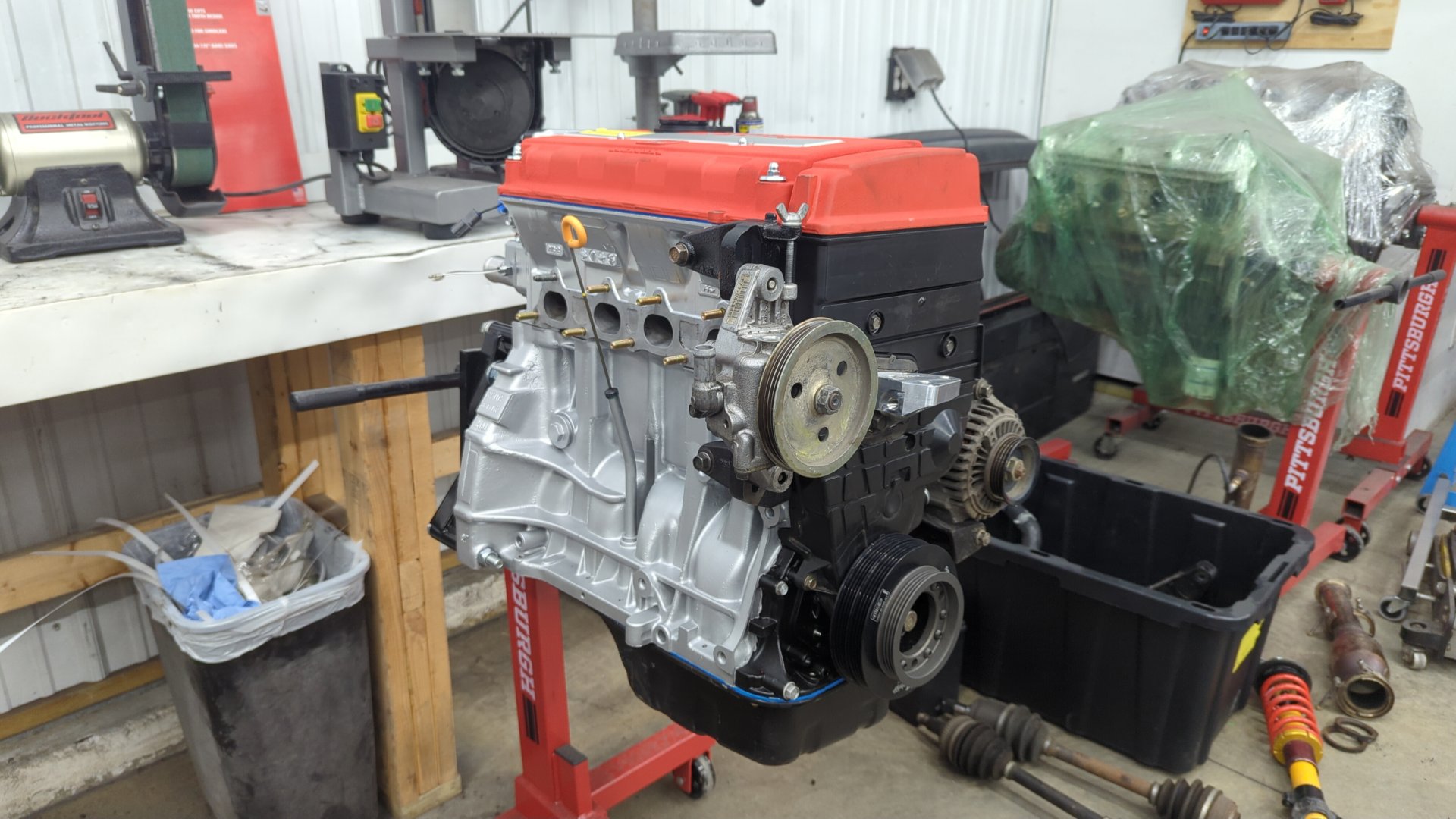
Power Steering
You can use any VTEC or non-VTEC power steering pump because they’re all the same. For my build I used a P72 Integra power steering pump. The only thing you need to be careful about is the pump matches the high pressure line of the vehicle your installing it in. This means if you have an OBD1 chassis you need an OBD1 pump, or if you have an OBD2 chassis you need an OBD2 pump.
Bracket wise you’ll need to mix a VTEC upper bracket with a non-VTEC lower bracket. VTEC heads are wider than non-VTEC head so the non-VTEC upper bracket is too thick and will cause the PS pump to be excessively angled towards the front of the car and the tensioner bolt won’t work.
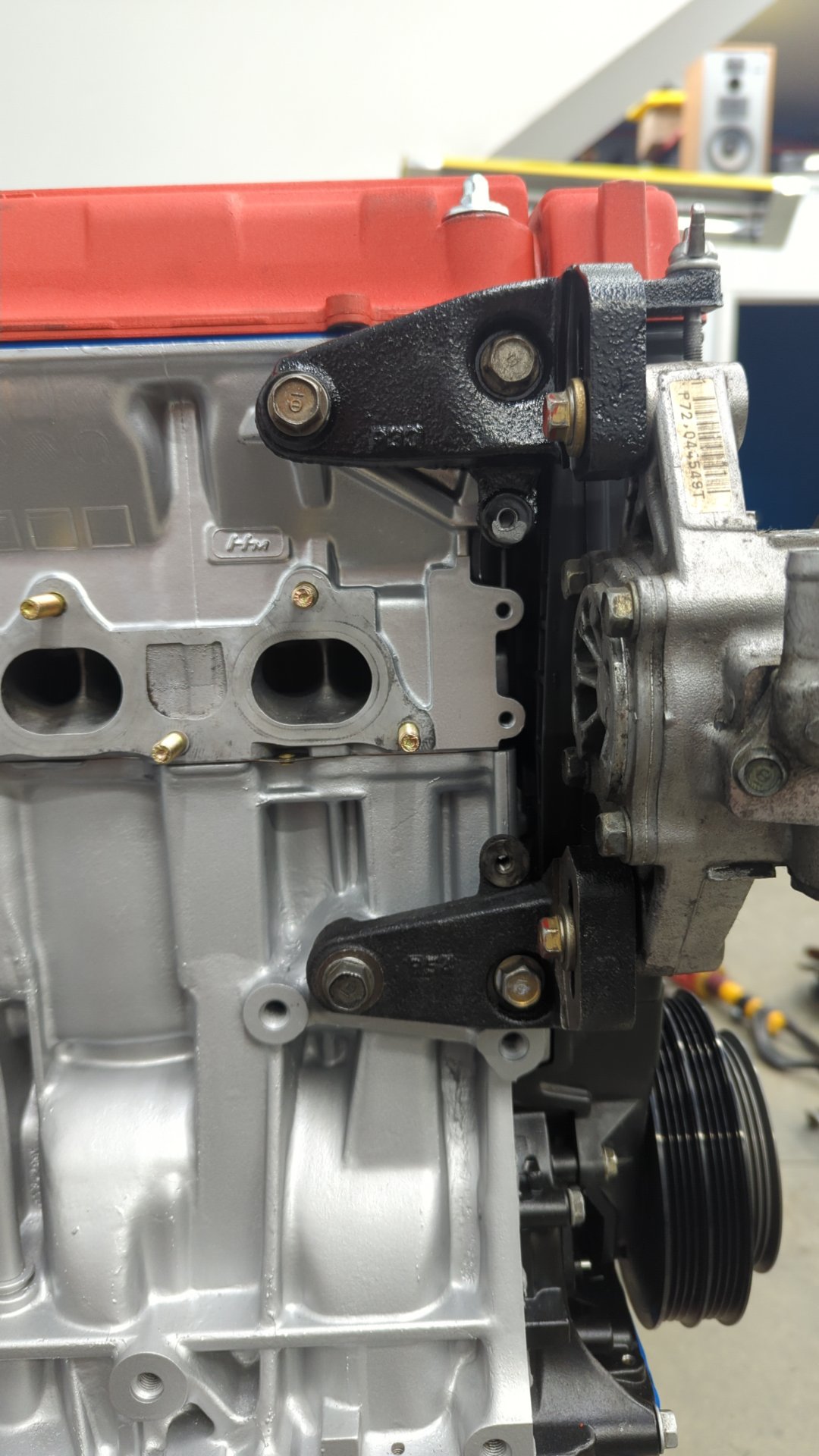
Lastly, a B20 PS belt likely won’t work due to the pump being in a slightly different spot. I’m also running a Fluidampr crank pulley with a slightly smaller diameter than the OEM crank and this made finding the correct belt harder.
Parts Used:
- 56110-P72-003 Power Steering Pump (any trim)
- 56994-P73-000 Upper PS Bracket (GSR / B16)
- 56992-P72-505 Lower PS Bracket (LS, GS)
- Gates Micro-V K040364SF Belt (Won’t work for OEM crank pulley)
I’m unsure what belt you’d want to run for an OEM crank pulley setup. I’d suggest starting with a Gates Micro-V K040355 as those work for regular B20s.
Alternator
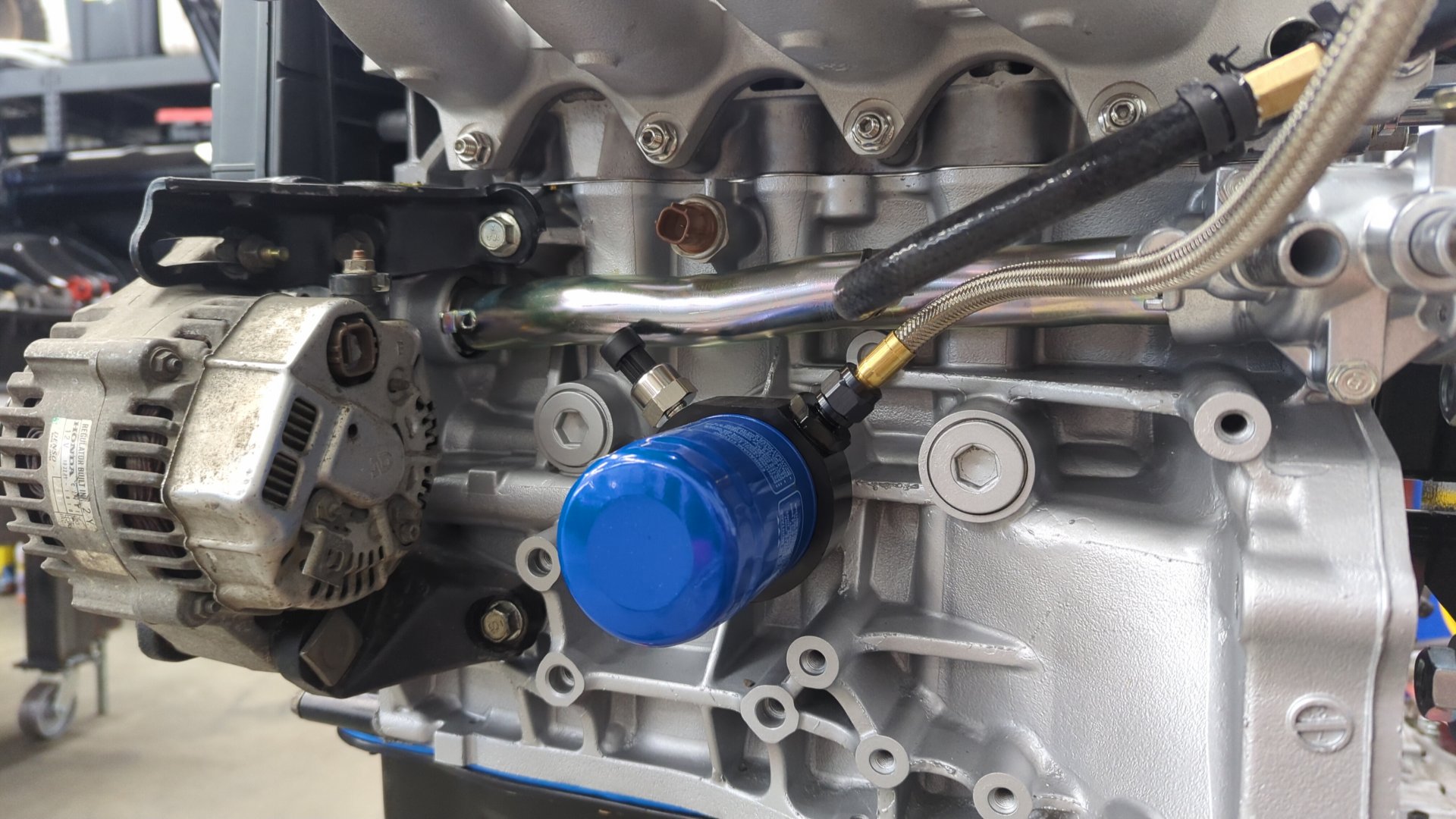
Just like the power steering pump you should try and match the alternator to your chassis when it comes to OBD1 vs OBD2. OBD1 alternators have a round plug whereas OBD2 alternators have a square plug. It’s okay if you can’t find a matching alternator for your chassis though since you can buy conversion plugs for dirt cheap that let you use an OBD1 alternator in a OBD2 car or vice versa. I’m running the OEM B20B alternator which is OBD2 in my OBD1 chassis via an adapter harness.
For brackets you’ll want to stick with the B20 upper and lower bracket.
Parts Used
- OEM B20B Alternator (I’m unsure of the part number)
- 31113-P54-000 Upper Alt bracket (CRV, LS)
- 31112-P2T-000 Lower Alt Bracket (CRV, LS)
- Gates Micro-V K040315SF (Won’t work for OEM crank pulley)
If you’re using an OEM pulley I’d recommend a Gates Micro-V K040319 belt. That’s what I used on my B20B and it worked fine.
An Aftermarket Crank Pulley May Require Modifications To Your Brackets
I was never able to find the right length alternator belt. I tried 4 different sizes and all of them were either slightly too long or too short so I ended up extending my upper bracket to allow for more adjustment.
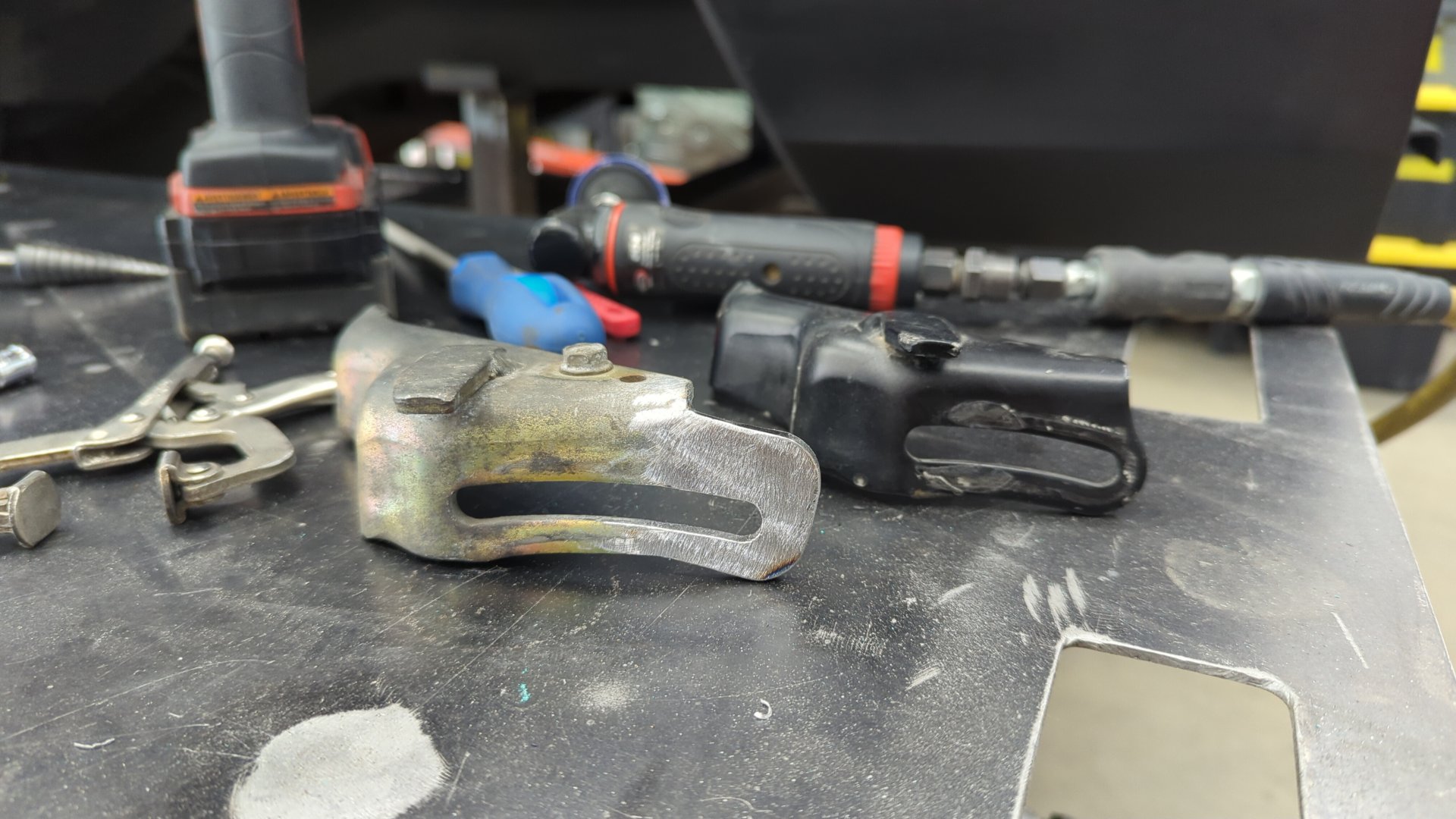
I believe this was only required because my crank pulley is smaller in diameter than the OEM one. Extending the bracket is pretty easy as long as you have access to a welder and a grinder with a carbide burr.
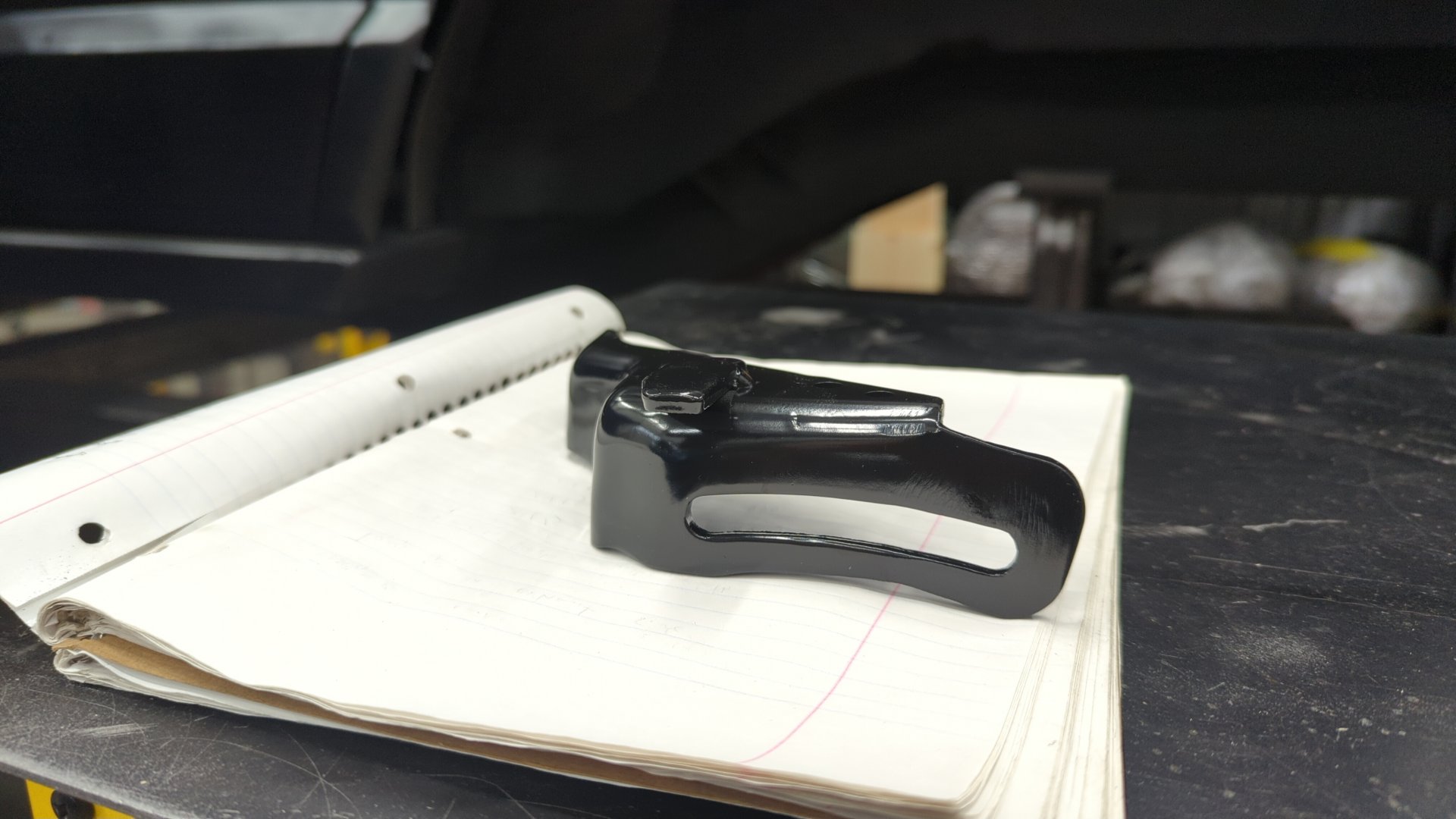
Just make sure you don’t extend it too far otherwise your alternator may hit the frame rail. I still have about 1cm of clearance so even when the engine is moving while under load it never touches the chassis.